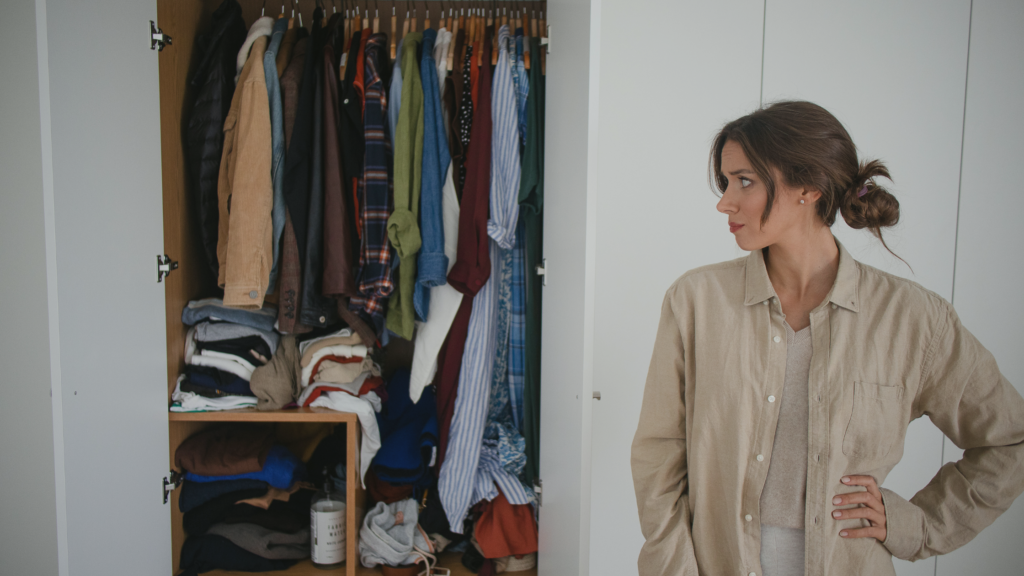
Have you ever spent hours decluttering, filled several bags with things to donate, and a few days later think, Why does it still feel so cluttered?
You’re not imagining it.
Decluttering can make a huge difference, but getting rid of things is only one part of creating an organized home. Sometimes the problem is where things are, how they’re stored, and whether your home has systems that actually work for you.
Clutter Isn’t Always About Having Too Much
It’s easy to assume that a cluttered home simply needs more things to be removed. Often that’s true. But clutter can also happen when the things you own don’t have a logical place to live.
Maybe the kitchen counter is always covered because there isn’t a convenient spot for the items you use every day. Maybe the entryway becomes a pile of shoes, bags, and mail because there isn’t a system for handling them when you walk through the door.
Even useful, necessary items can become clutter when they don’t have a home.
Your Organizing System May Not Match Your Life
An organizing system can look great and still not work.
If you have to move three things to reach the item you use every morning, you’re probably not going to put everything back exactly where it belongs. If your children’s belongings are stored somewhere they can’t easily reach, those items may end up on the floor instead.
A functional organizing system should make life easier, not require extra work every time you use it.
The best systems take into account how you actually live, including your routines, habits, mobility, and the things you use most often.
Flat Surfaces Become Clutter Magnets
Kitchen counters, dining tables, bathroom counters, dressers, and other flat surfaces have a way of collecting everything.
Why?
Because they’re convenient.
When something doesn’t have an obvious home, the closest flat surface often becomes its temporary home. Then another item gets added, and another, until the surface is covered.
Instead of repeatedly clearing the same surface, ask a different question:
Why does this keep ending up here?
The answer can help you identify a missing system rather than simply another organizing project.
You May Need Better Systems, Not More Storage
Buying baskets, bins, and containers can be tempting when your home feels cluttered. But adding storage doesn’t necessarily solve the problem.
Sometimes more containers simply give you more places to hide things.
Before purchasing storage, consider what you’re keeping and where it needs to go. Once you understand what you actually need to store, you can choose solutions that fit the space and make sense for your daily routines.
Decluttering and Organizing Work Together
Decluttering helps you determine what deserves space in your home.
Organizing helps you determine where those things should live.
You often need both.
If you organize without decluttering, you may spend time creating systems for things you don’t actually need. If you declutter without organizing, you may have less stuff but still struggle with where everything belongs.
The goal isn’t simply to have less. It’s to create a home that is easier to use and maintain.
Look at How Your Home Functions
If your home still feels cluttered after you’ve decluttered, take a step back and pay attention to what happens during a normal day.
Where do things pile up?
What items are difficult to put away?
What do you constantly search for?
Which spaces are frustrating to use?
These trouble spots can tell you a lot about what your home needs.
When You Need a Fresh Perspective
If you’ve decluttered, reorganized, and bought storage containers but your home still feels “cluttered,” it may be time for a different approach.
A professional organizer can look at your space with fresh eyes and help identify why clutter keeps returning. Instead of simply making things look tidy, the goal is to create systems that work for you and your home.
Because an organized home isn’t one that stays perfectly tidy all the time.
It’s a home where the things you use have a place, the systems make sense, and putting things away doesn’t feel like another chore.
And sometimes, that’s the difference between a home that looks organized and a home that actually works.